Together Teaching: How Co-Teaching Creates Opportunities for Every Student to Succeed
 At LEAD Public Schools, we believe success starts with providing every student the opportunity to ask questions and receive individualized support inside and outside of the classroom. Across the network, our high teacher-to-student ratio allows us to implement a collaborative co-teaching model, where educators work as equal partners to deliver instruction, support individual learning needs, and create an environment where every student can succeed.
This model isn’t just about having an extra set of hands in the classroom, but is intentionally designed to ensure students feel supported and ready to tackle academically rigorous material. For pairs across LEAD Public Schools, the success of this approach to co-teaching comes down to trust, communication, and a shared commitment to students.
 Building a Partnership of Equals
At LEAD, co-teaching brings together two educators with complementary areas of expertise: a general education teacher who focuses on content instruction and a co-teacher who provides targeted support to meet individual student needs. While each teacher brings a different skill set to the classroom, co-teaching at LEAD is built on equal partnership and ownership of the environment and all student learning.
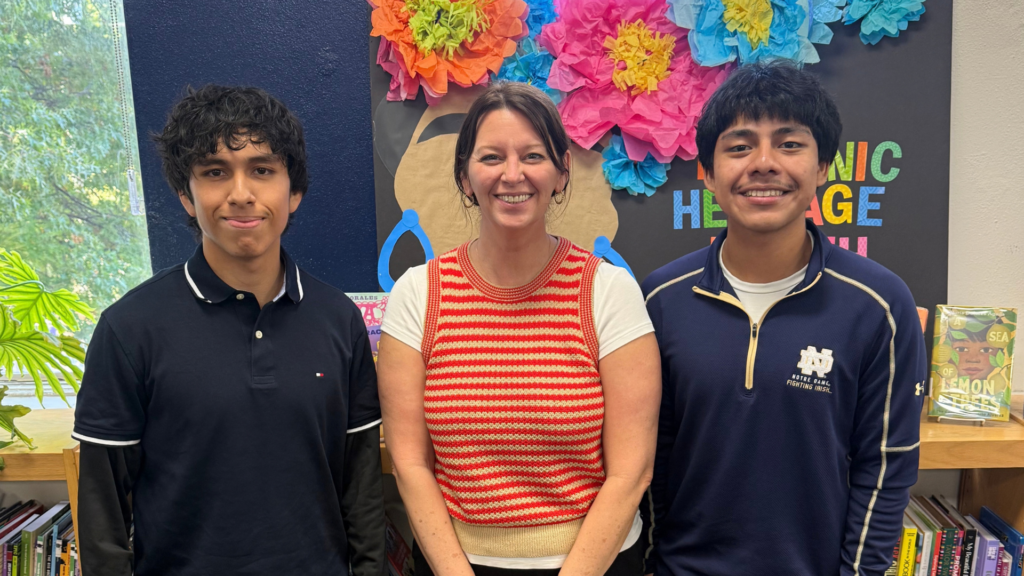
LEAD Southeast Middle School co-teachers Deborah Diamond and Damontez Cox describe their push to be equals in the classroom as “making a huge difference” in their teaching.
“I’ve had co-teaching relationships in the past where the co-teacher was only pulling small groups, so the kids didn’t see them as an equal teacher in the classroom,” Cox said. ”We’ve been very intentional about positioning ourselves as equals in our classes; she steps in and adds on, or stops part of the lesson to explain something differently, and vice versa. That really makes a difference when it comes to our classroom culture and ensuring students are seeing us as equal partners.” This shared responsibility allows both teachers to bring their strengths to instruction, while ensuring students see two educators equally capable of supporting their learning.
 Collaboration That Strengthens Instruction
 Collaboration That Strengthens Instruction
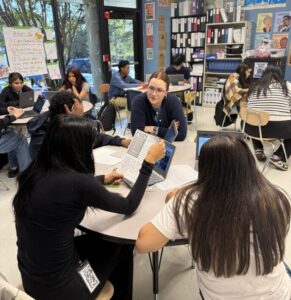
Behind each successful co-teaching partnership is collaborative planning and consistent communication. For LEAD Southeast High School teachers, Rachel Braly and Alex Bogle, collaboration has created opportunities to rethink instruction to best suit the needs of students.
“I’ve been teaching 11th grade U.S. History for seven years now, and sometimes I have ‘planning blindness’, where even though I’ve done something the same way for years, it doesn’t mean it’s the best way to reach all students,” Braly explains. “It’s made such a difference to have someone who knows our students and is an expert with accommodations looking at everything to make sure all of our students can access and interact with the material.”
Similarly, Cox and Diamond emphasize collaboration and communication with their planning processes by beginning each day with a quick huddle to review lessons, identify potential challenges, and determine where students may need additional support.
“It’s constant check-ins and touchpoints to make sure we’re on the same page,” Diamond explained. “It’s not hard, and it’s not long, but it makes a world of difference.” Both partnerships recognize that effective co-teaching requires openness to feedback, flexibility, and a willingness to learn from one another.
Making Every Student Feel Supported
Ultimately, the greatest impact of co-teaching is felt by students. By sharing instructional responsibilities, teachers can provide small-group support and check in with individual students without interrupting the flow of learning or making some students feel singled out.
“I definitely think this approach to co-teaching raises our students’ confidence and doesn’t make anybody feel different,” Diamond said. “We have mixed ability grouping, and a lot of peer-to-peer interaction and opportunities to help each other. Everybody in the room is a part of the class.”
For Braly and Bogle, creating that same sense of belonging means building a classroom culture where students feel comfortable asking questions and receiving support. By using mixed-ability groups and balancing whole-class instruction with individualized attention, they ensure all students stay engaged and confident throughout the lesson.
“It’s about that balance of having someone who can keep the pace of the lesson and pulse-check the general class, paired with someone who can help with that individual support where it’s needed, so kids aren’t sitting lost and confused during class,” Bogle shared.
Across LEAD Public Schools, co-teaching reflects a shared commitment to meeting students where they are while holding every student to high academic expectations. By working together as equal partners, LEAD educators are creating classrooms where all students have the support, confidence, and opportunities they need to succeed.